These Apocalyptic Optimists Are Building a Better World Today
Inside the new climate movement bypassing dread to engineer tangible solutions right now.
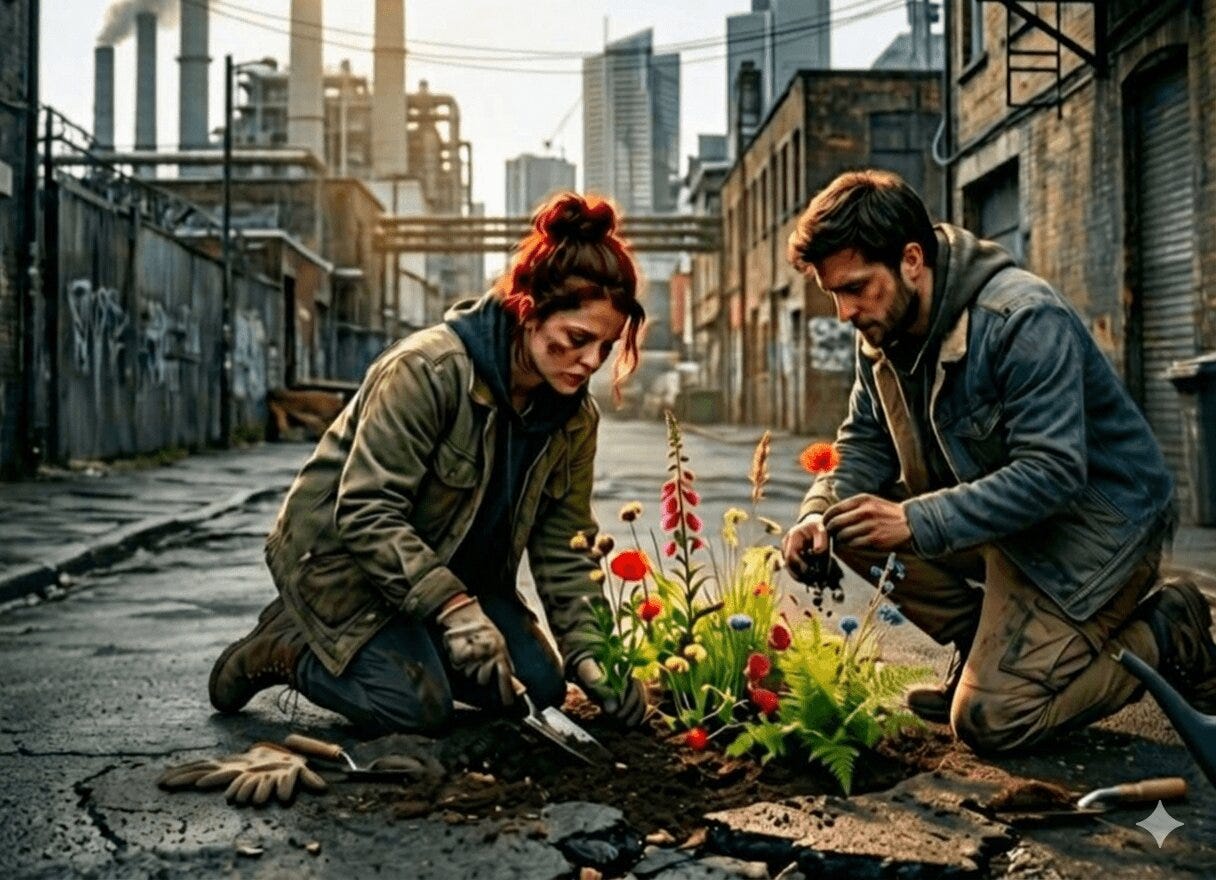
If you’re anything like me, you’re looking at the apocalyptic headlines—the smoke-filled skies and the record-smashing heatwaves—and feeling a heavy dread.
But we are being sold a false choice. We are told to either trust that futuristic technology will magically save us, or surrender to paralyzing apathy.
But lately, a third option has emerged: apocalyptic optimism. Coined by sociologist Dr. Dana Fisher, this mindset is the radical choice to accept that severe crises are locked in, and decide to fight for the best anyway.
Chance Encounter with an Apocalyptic Optimist
I first ran into this mindset when I met a local climate activist. She was utterly convinced the planet was headed for collapse, yet she was spending her weekends fighting a new gas power plant.
When I asked her why she bothered, she said, “I’m not going to go down without a fight.”
I loved her spirit. It filled me with joy, and gave me living proof of a truth we all need right now:
Action is the ultimate antidote to despair.
The Four Mindsets of Climate Grief
To understand apocalyptic optimism, look at how people react to climate headlines. Everyone generally splits into four distinct quadrants based on their mindset and actions:
Optimistic Doers: They believe we can solve the problem and work to save what is left. (This is where I stand).
Optimistic Do-Nothings: They assume futuristic technology will magically save us, so they do nothing. (A lost cause).
Apocalyptic Optimists: They believe severe climate disruption is locked in, but they refuse to go down without a fight. (Massive respect to this group).
Doomer Do-Nothings: They claim the game is already lost, using doom as an excuse to do nothing.
Apocalyptic Optimists Are Making a Difference
Here is the good news: our combined efforts are already paying off. Because of global climate resistance, we have successfully avoided the worst-case climate scenarios. But there is still so much more we can do to make a difference.
Even if we can’t fully prevent a turbulent future, the actions we take right now have immediate impact. For instance, every single 10% reduction in fossil fuel use prevents over half a million human deaths from air pollution today. It also saves countless wild animals who breathe the exact same air we do.
Don't Go Down Without a Fight
Ultimately, your belief in our planet’s final fate is irrelevant. The only thing that actually matters is that you step up to protect what is left.
Ignoring the gloomy headlines won’t save you, but letting them paralyze you won’t save anyone else either. Despair is a luxury we don’t have time for. Action is the only true antidote.
Ignore the noise and choose to make a difference.
When future generations look back, we want to tell them we did more than just read scary news and surrender.
Let’s show them we exhausted every option—and didn’t go down without a fight.
If you want to get involved and start making a difference right now, I have compiled a comprehensive resource list of climate organizations at the bottom of a previous article to help you get started.
Join the Conversation
If you want stories of climate solutions delivered directly to your inbox every week, consider subscribing.
Two optimistic books about climate change that aren’t all doom and gloom. This is out of a field of 120:
Julian Cribb. How to Fix a Broken Planet: Advice for Surviving the 21st Century. Copyright 2023. Cambridge University Press, Cambridge, UK.
Susan Solomon. Solvable: How We Healed The Earth, And How We Can Do It Again. Copyright 2024. The University Chicago Press, Chicago, Il.
I will be posting a review of Cribb’s book this week.
Yes, I understand! I can imagine that a lot of people fit into these groups. I just thought it was worth mentioning this group, because I think it's quite a big group and especially, like I said, because it has the most potential.
And about your question: I believe it has to do with really understanding human behaviour an all the reasons and psychological mechanisms that are standing in the way for people to act. It's actually what I write about. And on here, climate psychologist Renée Lertzman writes very valuable things about it, if you're not following her yet.